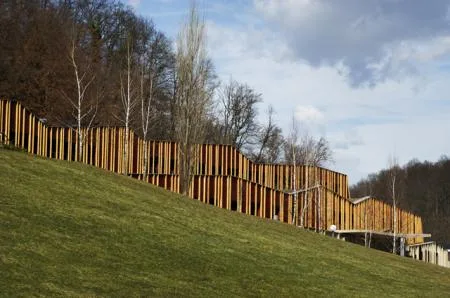
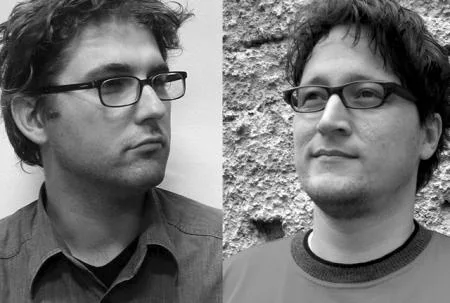
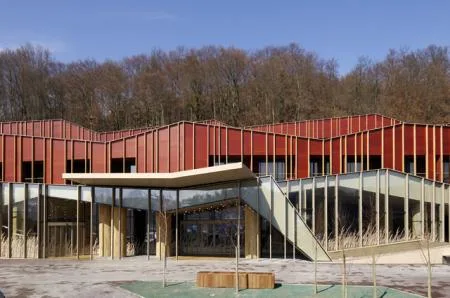
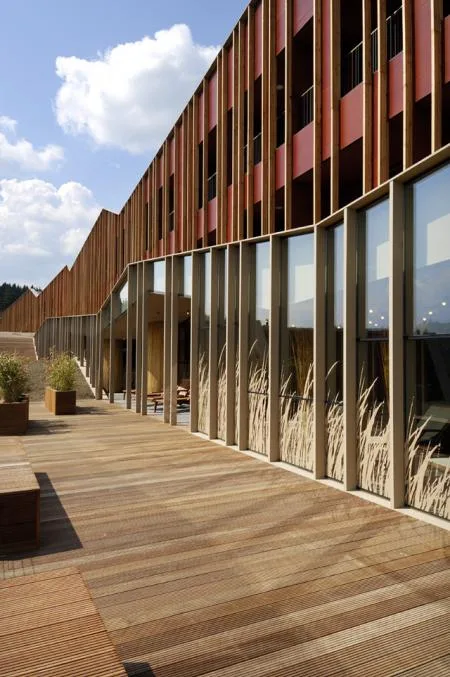
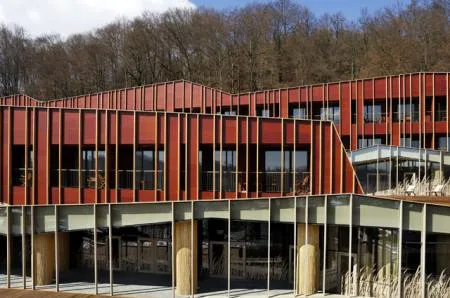
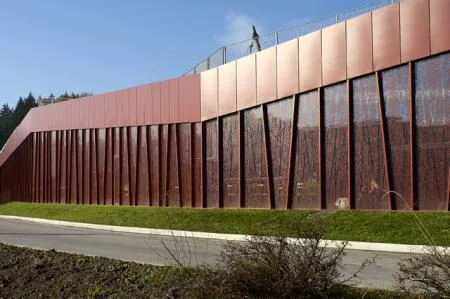
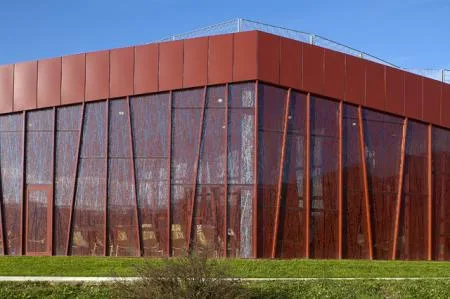
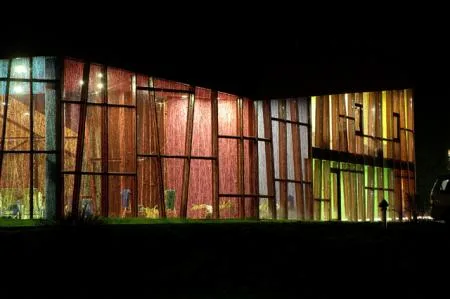
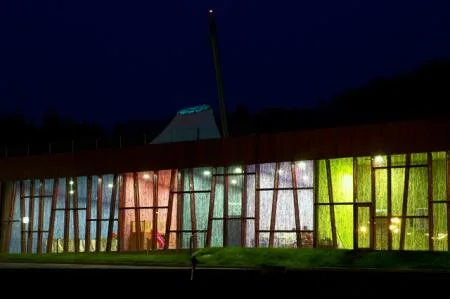
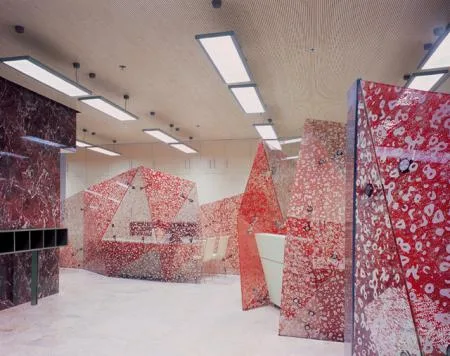
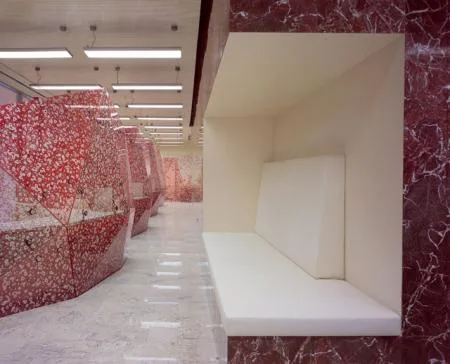
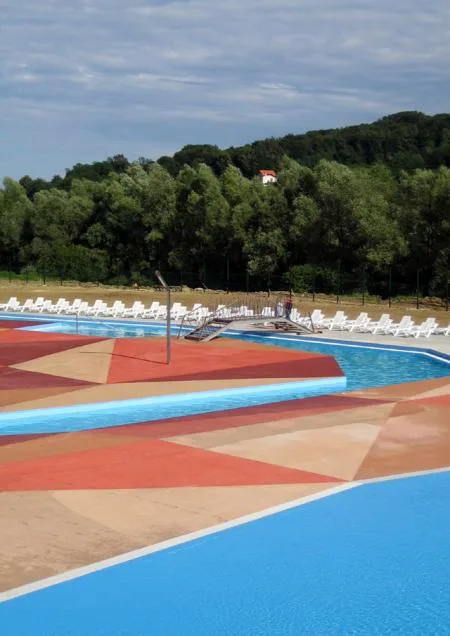
Within the lively scene of young Slovenian architectural practices, the office enota is deliberately pragmatic. Still, it soon becomes obvious that pragmatism must not at all be equivalent to boredom. This is not only proven by numerous ambitious projects of enota, but also by the fact that the group just won this year’s Jože Plečnik-Award for the hotel of Thermae Olimia in Podčetrtek. enota, founded in 1998 by Aljoša Dekleva, Dean Lah and Milan Tomac in Ljubljana, has been led by Dean Lah and Milan Tomac since Aljoša Dekleva left in 2003. The philosophy of enota is as sober as the group’s view on their colleagues. GAT spoke with Milan Tomac about auto-promotion and criticasters among architects.
GAT: Unlike the names of other young Slovenian architectural practices, “enota” does not signify a specific person. Instead, it is a group label. What does the name mean?
Tomac: enota means unit. We believe that architecture is not so much an individual performance as it is teamwork. Some young practices think that names must be attractive and that persons are important. This is not our style. enota could be anybody’s practice. Whoever would like to do so or has been working with us for some time can become our partner.
GAT: So you are not interested in auto-promotion?
Tomac: Let me put it like this: I just do not like to walk around telling everybody how good I am. It’s not the way I am. But I admit that those who do so have more publicity and get more jobs. That’s it, there’s nothing we can do about it. In our modern world you must be outstanding in order to become noticed.
GAT: How do you tackle the situation? What is your strategy?
Tomac: To get commissions? I think that architecture still is about working on concrete projects. Architecture does not mean collecting awards, giving lectures or taking part in social events. We are a commercial practice. Commercial in the sense that we started from zero and want to be paid for the work we do – just like other people. In Slovenia, an architect usually earns less than average, internationally speaking. So you must do more projects for making a living. This may be good or may be not, but you learn to be fast and to work efficiently. You are more productive, and therefore you also have more projects that you can show. It is clear that not everything will be perfect, because we do not have enough time to elaborate sophisticated details or similar things. Currently six people are working on fifteen projects in our office – this is not a pleasant situation!
GAT: The Slovenian architectural theorist Andrej Hrausky describes Slovenia as a capitalistic democracy. Does capitalism force enota to become a commercial enterprise?
Tomac: I think that every agency must be commercial. Nobody can afford working on illusions, you must work on real projects. And real projects are paid projects. The problem of architecture is that quality is a delicate thing. After all, what is good or bad architecture and who is a good, who a bad architect? The grounds for deciding these questions are interpersonal and hence vague. We are engineers. I believe in stability, in things which are fixed. Whereas, when it comes to judging architecture, everything is in flux. If you pretend long enough to be good, you are good. If your client believes that you are good, you will get more commissions. However strange this game may be, I think that the commercial way in architecture is a good way. I believe that all important architects are commercial architects.
GAT: Would you ever refuse a commission?
Tomac: Yes, if the client’s ideas do not fit ours. But every client gets the architect he deserves – and vice versa. The client and the architect find themselves. You hardly work with a client who is completely incompatible with you. Hence we rarely refuse an order. Maybe we can afford to do so later. But if you start your business as a young architect, every project is important for you.
GAT: How would you describe the current order situation in Slovenia? What are the opportunities for young agencies?
Tomac: As far as I can see, young architects have better opportunities in Slovenia than in Austria, also because in Slovenia there are very few older architects that remained. When the political system changed fifteen years ago, most major Slovenian practices failed together with the socialist era. There were no more investments, and only a few agencies managed to overcome this “black hole” between 1985 and 1995. When the young practices of today were founded after 1995, there was nothing left of the old times. And moreover, also the working mode in the agencies had completely changed with the rise of the computer. Nobody older than 25 could handle such a thing! We could learn from nobody and had to start from scratch. I was lucky to work with Sadar Vuga at that time, who just had opened their practice, designing the Slovenian Chamber of Commerce and Industry in Ljubljana. Most staff members were still studying and we had no idea how to realize the building. Statics, physics, site management – we didn’t know nothing, nothing. It was incredible: the work which should have been done by experienced architects was done by students. Because there were no experienced architects any more, young guys were working on big and important projects. And fortunately enough there were only a few projects of this kind – who knows what would have happened otherwise!
GAT: That sounds euphoric.
Tomac: I am proud to be part of this relatively strong generation after the political turn. But there are also many problems today. Architects are not respected, people hardly trust them. Maybe it is the architects’ fault too, because we learnt how to design, how to make concepts, how to draw or to co-operate with engineers and authorities, but what we still do not master is to convince our clients that the cheapest way is not always the best one, and that an architect is somebody they can trust. But beyond these problems you can get many orders as a young architect. It just depends on money, and money is relative. The fees range from very good to one tenth of that. If you would work for nothing, you could have as many projects as you want.
GAT: Still, competition seems to be strong amongst young Slovene practices. How is their relationship, according to you?
Tomac: Slovenia is small, everybody knows everyone and everybody talks about everyone. What makes me sad is not that architects criticise each other, but that they do it publicly. This is very bad for our profession. You can criticise, but not publicly.
GAT: Are there debates going on between individual agencies, is there a flow or an exchange of ideas?
Tomac: Sometimes more, sometimes less. One example of such a debate is the Internet platform “Trajekt”, but enota is probably not active enough to co-operate in such a project. I work 12 hours a day and have no energy left for anything like that. However, these things are important and we must do something because in the end we are defending a common cause: how can architecture gain more confidence from society?
Translation: [Y'plus] Graz - http://www.yplus.at
- Verfasser/in:
- Fabian Wallmüller, Gespräch